From Overwhelmed to Supported: ADL Help in Small Assisted Living Homes
Business Name: BeeHive Homes of Granbury
Address: 1900 Acton Hwy, Granbury, TX 76049
Phone: (817) 221-8990
BeeHive Homes of Granbury
BeeHive Homes of Granbury assisted living facility is the perfect transition from an independent living facility or environment. Our elder care in Granbury, TX is designed to be smaller to create a more intimate atmosphere and to provide a family feel while our residents experience exceptional quality care. BeeHive Homes offers 24-hour caregiver support, private bedrooms and baths, medication monitoring, fantastic home-cooked dietitian-approved meals, housekeeping and laundry services. We also encourage participation in social activities, daily physical and mental exercise opportunities. We invite you to come and visit our assisted living home and feel what truly makes us the next best place to home.
1900 Acton Hwy, Granbury, TX 76049
Business Hours
Families generally start asking about assisted living after a series of small crises. A fall in the bathroom. A pot left on the range. Medications mixed up again. What appeared like "a little lapse of memory" or "simply slowing down" ends up being something else: a daily scramble to keep a parent safe, dignified, and as independent as possible.
At the center of all of this are the activities of daily living, or ADLs. How a home supports those fundamental jobs often matters more than the design, the menu, and even the price. This is specifically real in small assisted living residences, where the scale, staffing, and culture feel extremely different from big senior care communities.
I have actually viewed households move from exhaustion and regret to genuine relief when they discover the ideal match. The turning point is almost always the very same: they finally feel supported, not alone, in the work of day-to-day care.
This article looks carefully at what ADL assistance truly indicates in a small setting, how it alters the experience of elderly care, and what to try to find if you are considering a move or a short-term respite stay.
What ADL support in fact covers
Professionals in some cases forget how foreign the term "ADLs" sounds to households. In practice, it simply implies the core jobs a person requires to manage every day without putting health or security at risk.
Most assisted living and elderly care teams focus on a familiar group of ADLs:
- Bathing and showering
- Dressing and grooming
- Toileting and continence
- Transferring and mobility (getting in and out of bed or a chair, strolling securely)
- Eating, including set-up and sometimes feeding
Around those fundamentals sit the "crucial" activities like managing medications, cooking, house cleaning, laundry, dealing with financial resources, and transport. Technically these are IADLs, however in a lot of real-life senior care settings, households discuss everything together: "Mom just can't handle the home" or "Dad is great physically however unsafe with pills and expenses."
Good ADL assistance in assisted living is not almost task conclusion. It integrates safety, performance, regard, and versatility. For instance:
A resident may be physically able to dress however takes an hour to select clothing and tires halfway through. In a small residence, a caregiver who knows her may set out 2 outfit choices the night before, then return in the early morning to help with buttons, stockings, and shoes. She still selects. She participates. The assistance is quiet and woven into her typical routine.
That mix of aid and self-reliance is where quality of life lives.
Why the size of the residence matters
Small assisted living homes, typically called "board and care homes," "RCFEs" in some states, or just small homes, generally house between 4 and 16 locals. The precise number varies by state guideline. The crucial difference is scale.

In a building of 80 or 120 citizens, policies, staffing patterns, and workflows have to serve lots of people simultaneously. That can work well for active older adults who require minimal help. When ADL assistance ends up being central, the experience changes.
In small settings, three factors typically stand out.
First, personnel familiarity. When a caretaker works with the very same 6 to 10 residents day after day, subtle changes are obvious. They see when somebody begins having problem with their walker, when arthritis stiffens hands enough to make buttons challenging, or when a generally talkative resident suddenly withdraws. That early notice matters for both safety and dignity.
Second, flexibility of regimens. Big neighborhoods often require fixed shower days or dressing schedules just to cover everybody. In a small house, there is often more space to adjust. Early birds can shower at 6:30 a.m. If that is their lifelong habit. Night owls can oversleep and still receive unhurried help getting ready.
Third, emotional climate. ADL care needs trust. Having 2 or 3 familiar caregivers rotate through, rather of a long parade of brand-new faces, makes it simpler for citizens to accept intimate aid such as bathing or toileting. Households typically report that their relative becomes less resistant once they understand and trust the staff.
None of this means that every small home is best, nor that big assisted living can not offer exceptional care. It suggests that the structure of a small home naturally supports a specific design of senior care: relationship-based, watchful, and often more customized to individual rhythms.
Moving from "doing for" to "supporting with"
One of the most significant shifts for families happens not in the physical move, but in mindset.
At home, adult kids and partners are under pressure. They typically rush through tasks, "providing for" the older adult simply to get it done. Early morning routines can seem like a race: get him to the bathroom, get clothes on, get breakfast made, rush to work. There is little space for the individual's rate or preferences.
In a well-run small assisted living residence, the team has a different starting point. Their task is not simply to get someone showered. Their task is to assist that individual remain as capable, positive, and comfortable as possible.
A caretaker might:
- Encourage the resident to clean their face and upper body, while assisting with hard-to-reach places.
- Offer a shower chair and handheld sprayer, so balance concerns do not become a barrier.
- Use warm towels, preferred soap scents, and soft background music if the person is distressed about bathing.
These are not high-ends. They directly affect how most likely a resident is to accept assistance, and just how much independence they keep month to month.
Families often fret that "too much aid" will cause decline. The genuine danger is the incorrect kind of help, provided in a hurried or controlling method. In small elderly care homes, personnel can see carefully: when to cue, when simply to wait for safety, and when to step in fully.
The finest concern to ask a supplier about ADLs is not "Do you assist with bathing?" however "How do you help, and how do you choose when to action in or step back?"
A day in a small assisted living house, through the lens of ADLs
To see how this works in practice, envision a typical day for a resident called Helen.
Helen is 87, with moderate arthritis and moderate memory loss. She moved from her child's home after numerous falls and one frightening night of roaming. Before the relocation, her child was assisting with almost every ADL on top of raising two teenagers and working full-time.
Morning: A caretaker knocks on Helen's door around her favored wake time. Instead of switching on all the lights and managing the blanket, they begin carefully: "Good morning, Helen. Are you ready to get up, or would you like a few more minutes?" That small respect sets the tone.
Transferring and toileting: The caregiver positions a gait belt, assists Helen sit up assisted living on the edge of the bed, then stands by as she uses her walker to reach the restroom. They assist without gripping too tightly, all set to support if she wobbles. On the toilet, the caregiver steps out of direct view however stays close sufficient to help with clothes and hygiene as needed.
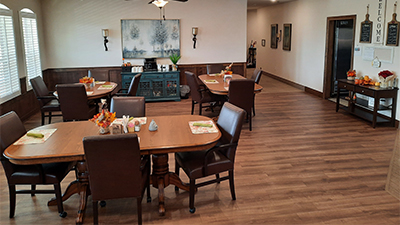
Bathing and grooming: On set up shower days, the restroom is prepared in advance, with non-slip mats, a shower chair, and the water set to her favored temperature. On other days, a partial sponge bath at the sink might be enough. The caretaker sets out her hairbrush, denture cup, and face cream just as she utilized to do at home.
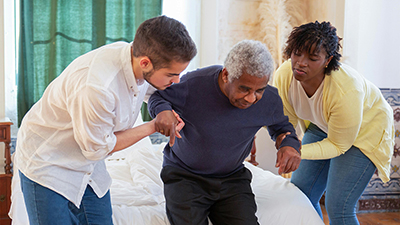
Dressing: Rather of simply dressing Helen, staff lay out weather-appropriate clothing and ask which blouse she prefers. They assist with the harder pieces - bra hooks, compression stockings, shoes - and let her manage what she can. This takes longer than doing everything for her, however it keeps her brain and body engaged.
Meals: At breakfast, Helen discovers her location already set with utensils that are easier to grip. Personnel notice if she has trouble cutting food and silently step in. They focus on chewing and swallowing, to ensure absolutely nothing about her health or medications has actually changed.
Mobility and activities: Throughout the day, caregivers offer a steadying hand when she stands, encourage brief walks in the corridor for exercise, and trigger her to participate in basic activities. Movement is woven into typical life, not left to a weekly "workout class."
Evening: As bedtime techniques, personnel cue Helen to become nightclothes and help where arthritis makes it hard to bend or reach. They check for incontinence items, make certain paths are clear, and ensure her call system is within reach.
None of these jobs are remarkable. What makes them powerful is consistency. When delivered attentively, day after day, they prevent small issues from ending up being huge ones.
How respite care fits into the picture
Respite care in a small assisted living residence can be a bridge in between overwhelmed household caregiving and a permanent relocation. It provides everyone a possibility to experience how ADL support operates in that setting.
Families frequently use respite for three main reasons.
First, to recuperate. A primary caretaker who has actually been providing round-the-clock elderly care is frequently physically and emotionally spent. A week or a month of respite can permit correct sleep, medical visits, or even a brief trip without the constant fear of "what if something takes place while I am gone."
Second, to assess fit. A short stay lets you see how your relative reacts to the environment. Do they seem more relaxed with regular assistance? Do they eat better when meals appear on a schedule? Are they calmer with a predictable regular and less family demands?
Third, to test the care level. You can see how staff handle ADLs in genuine time, not simply in the pamphlet. For instance, how patiently do they help with toileting at 2 a.m.? Is the same caregiver typically present, or exists consistent turnover? How do they respond if your relative refuses a shower or becomes agitated?
Respite can likewise clarify requirements. Families in some cases discover that the individual requires more assistance than they understood, or in various areas than they expected. For instance, a parent who "just needs aid with bathing" might really deal with sequencing the actions of dressing, or with safe transfers from recliner chair to wheelchair.
Handled well, respite care is less about "putting" a loved one and more about forming a collaboration. It is a trial run for shared care, where household and staff learn how to support the very same individual in complementary ways.
The emotional side of accepting ADL help
ADL support makes love. It touches self-respect, identity, and long-formed routines. Accepting assist with bathing or toileting can feel like a loss of the adult years, specifically for someone who has spent decades in a caregiving function themselves.
Small residences often have an advantage here, because relationships build rapidly. When the same caretaker aids with breakfast every morning, jokes about the weather, keeps in mind grandchildren's names, and understands precisely how someone likes their coffee, the leap to accepting help in the restroom ends up being smaller.
Still, resistance is common. I have actually seen numerous patterns:
Residents who highly value modesty may refuse showers, yet accept aid with hair cleaning at the sink.
Those with early dementia may firmly insist "I currently showered" when they have not. Arguing escalates things. Non-confrontational methods work much better: "Let's freshen up before lunch" or "Your daughter is stopping by later on, let's get ready so you feel comfy."
Proud individuals may bristle at the word "assistance" however endure "assistance" or "standby." The language matters.
Caregivers in small homes have the time to find out these subtleties. They see what works, share techniques with coworkers, and change. Over time, resistance frequently softens as residents feel safe and respected rather than managed.
Families can support this process by framing the relocation and the aid as an upgrade in comfort, not a demotion. For instance, "You have individuals here whose job is to make your mornings easier. Let them ruin you a bit."
Balancing self-reliance and safety
A core tension in assisted living, particularly around ADLs, is where to draw the line in between letting somebody do tasks their own way and stepping in to avoid harm.
In small residences, decisions typically come down to three guiding questions:
Is the resident aware of the risk?
Are they capable of understanding the consequences?
Does their choice put others at threat, or just themselves?
For example, someone with moderate balance concerns who demands standing to brush teeth may be enabled to do so, with a caretaker nearby and grab bars set up. If that exact same person insists on strolling unassisted on a slippery deck after rain, personnel might draw a firmer boundary.
Families sometimes battle when the house allows a level of danger they themselves would not have at home. The goal is not no threat, which is impossible, however appropriate risk that maintains dignity and autonomy.
A thoughtful small assisted living group will document these choices, communicate them clearly, and revisit them often. As health modifications, the balance shifts. That is regular. What matters is that modifications in ADL assistance are not driven solely by convenience, but by thoughtful assessment.
What to ask when evaluating a small assisted living residence
Families exploring small senior care homes typically focus on appearances: Is it clean? Does it odor okay? Do citizens appear material? These are essential, however for ADLs you require deeper insight.
Here are practical questions that reveal how a house genuinely handles daily care:
- How many locals are here, and the number of caretakers are on each shift, consisting of overnight?
- Can you stroll me through a common early morning for someone who requires aid with bathing and dressing?
- Who does the evaluations for ADL requires, and how typically are they updated?
- How do you handle a resident who refuses care such as showers or medications?
- What modifications in care or cost must I expect if my loved one's ADL needs increase?
Listen less to the sales pitch and more to the specifics. An administrator who can answer with detailed examples, instead of general guarantees, generally runs a more organized and attentive program.
If possible, ask to visit throughout a busy time: morning or night. Peaceful mid-afternoon trips can hide staffing spaces that only show during peak ADL assistance hours.
When needs modification over time
Assisted living is often presented as a fixed level of care, however in practice, ADL needs shift. Arthritis intensifies. Cognition declines. A stroke or hospitalization resets functional ability overnight.
Small homes differ widely in how far they can go. Some are licensed only for light help and needs to discharge residents who become non-ambulatory or fully dependent. Others are able to manage greater levels of elderly care, consisting of substantial ADL assistance and hospice coordination, as long as requirements remain within their license and staffing capabilities.
Families should clarify:
What are the "deal breakers" that would need a move? Total two-person transfers? Particular medical devices? Serious behavioral issues?
How do they interact increasing needs and associated cost changes?
Can outside home health, therapy, or hospice services can be found in to support more complex care?
Knowing these borders early prevents unexpected, painful shifts later. It also clarifies how long a small assisted living house may be a practical home and partner in care.
When household caretakers lastly feel supported
One daughter put it candidly after her father's first month in a small assisted living home: "I am still his daughter, however I am no longer his nurse, his housemaid, and his bodyguard."
That is the shift that ADL assistance in the right setting can bring.
At home, she had actually been managing his incontinence products, lifting him from bed, coaxing him into the shower, tracking medications, cooking low-salt meals, and staying half-awake every night listening for falls. She loved him, but she was stressing out, and bitterness had begun to watch their conversations.
In the small home, caregivers dealt with the physical side of his daily life. She checked out as his child once again. They reminisced, viewed sports, argued about politics, and laughed. She could leave at the end of a visit without a wave of fear about what might occur when she was not there.
The father, devoid of seeming like a concern in his child's home, unwinded. He delighted in having other people around at mealtimes, and he grew near one night-shift caretaker who shared his interest in jazz.
That sort of outcome is manual. It depends greatly on the particular home, the training and stability of staff, and the match between resident needs and the home's abilities. However when it works, the impact reaches far beyond the lists of ADLs and into the emotional lives of entire families.
Final thoughts for families at the crossroads
If you are considering a small assisted living house for a parent or partner, start with 3 core reflections.
First, be honest about current ADL needs. Write down how much hands-on assistance your relative actually needs throughout a regular day, consisting of nights. Different the suitable from what is truly occurring. That clarity will prevent underestimating the level of assistance needed.
Second, think of the kind of environment your relative prospers in. Some people do best with the energy of a large community and numerous activity choices. Others prefer the calm, family-like rhythm of a small home where staff and locals know each other intimately.
Third, recognize your own limits. Love is not a boundless resource. Neither is energy. Moving from overwhelmed to supported is not a failure. It can be a wise modification, one that honors both the older adult's needs and the caretaker's humanity.
ADL assistance in a small assisted living home is not simply a set of services. Done well, it is a day-to-day practice of noticing, adapting, and appreciating. It can turn fundamental care jobs into a structure for security, self-reliance, and connection throughout the last chapters of an individual's life.
BeeHive Homes of Granbury provides assisted living care
BeeHive Homes of Granbury provides memory care services
BeeHive Homes of Granbury provides respite care services
BeeHive Homes of Granbury supports assistance with bathing and grooming
BeeHive Homes of Granbury offers private bedrooms with private bathrooms
BeeHive Homes of Granbury provides medication monitoring and documentation
BeeHive Homes of Granbury serves dietitian-approved meals
BeeHive Homes of Granbury provides housekeeping services
BeeHive Homes of Granbury provides laundry services
BeeHive Homes of Granbury offers community dining and social engagement activities
BeeHive Homes of Granbury features life enrichment activities
BeeHive Homes of Granbury supports personal care assistance during meals and daily routines
BeeHive Homes of Granbury promotes frequent physical and mental exercise opportunities
BeeHive Homes of Granbury provides a home-like residential environment
BeeHive Homes of Granbury creates customized care plans as residents’ needs change
BeeHive Homes of Granbury assesses individual resident care needs
BeeHive Homes of Granbury accepts private pay and long-term care insurance
BeeHive Homes of Granbury assists qualified veterans with Aid and Attendance benefits
BeeHive Homes of Granbury encourages meaningful resident-to-staff relationships
BeeHive Homes of Granbury delivers compassionate, attentive senior care focused on dignity and comfort
BeeHive Homes of Granbury has a phone number of (817) 221-8990
BeeHive Homes of Granbury has an address of 1900 Acton Hwy, Granbury, TX 76049
BeeHive Homes of Granbury has a website https://beehivehomes.com/locations/granbury/
BeeHive Homes of Granbury has Google Maps listing https://maps.app.goo.gl/xVVgS7RdaV57HSLu9
BeeHive Homes of Granbury has Facebook page https://www.facebook.com/BeeHiveHomesGranbury
BeeHive Homes of Granbury has an YouTube page https://www.youtube.com/@WelcomeHomeBeeHiveHomes
BeeHive Homes of Granbury won Top Assisted Living Homes 2025
BeeHive Homes of Granbury earned Best Customer Service Award 2024
BeeHive Homes of Granbury placed 1st for Senior Living Communities 2025
People Also Ask about BeeHive Homes of Granbury
What is BeeHive Homes of Granbury Living monthly room rate?
The rate depends on the level of care that is needed. We do an initial evaluation for each potential resident to determine the level of care needed. The monthly rate is based on this evaluation. There are no hidden costs or fees
Can residents stay in BeeHive Homes until the end of their life?
Usually yes. There are exceptions, such as when there are safety issues with the resident, or they need 24 hour skilled nursing services
Do we have a nurse on staff?
No, but each BeeHive Home has a consulting Nurse available 24 – 7. if nursing services are needed, a doctor can order home health to come into the home
What are BeeHive Homes’ visiting hours?
Visiting hours are adjusted to accommodate the families and the resident’s needs… just not too early or too late
Do we have couple’s rooms available?
Yes, each home has rooms designed to accommodate couples. Please ask about the availability of these rooms
Where is BeeHive Homes of Granbury located?
BeeHive Homes of Granbury is conveniently located at 1900 Acton Hwy, Granbury, TX 76049. You can easily find directions on Google Maps or call at (817) 221-8990 Monday through Sunday 9:00am to 5:00pm
How can I contact BeeHive Homes of Granbury?
You can contact BeeHive Homes of Granbury by phone at: (817) 221-8990, visit their website at https://beehivehomes.com/locations/granbury/, or connect on social media via Facebook or YouTube
Visiting the Acton Nature Center of Hood County provides peaceful trails and native landscapes ideal for assisted living and memory care residents enjoying senior care and respite care outings.
Ends · ELLIOTTPFQQ690